
GROWTH SYSTEMS / ABILITIES
Grow a Chicken Fighter abilities guide
The official Grow a Chicken Fighter description uses the phrase SPECIAL ABILITIES with an anime-styled presentation, which signals an ability layer around the chicken-fighting loop. This guide explains how to scope that promise without publishing a roster that the captured sources do not contain. Read the ability screen, connect a visible action to the PIT or TOWER, separate an animation from a measurable effect, and record the current wording so a future ability addition has a clean place to land.
01 / SYSTEM NOTE
What the SPECIAL ABILITIES signal tells you
The phrase SPECIAL ABILITIES is a direct product signal: players should expect named or presented abilities in the chicken-fighter fantasy. It does not reveal a complete list of abilities, cooldowns, damage values, unlock requirements, or a permanent order of strength. Start by finding where the current server presents the ability. It may appear beside a chicken, inside a fight screen, in a tower panel, or after a transformation. The location is part of the useful route information.
Once you find an ability, read its name and activation instruction exactly as displayed. Then test it in one supported context. If it changes a PIT result, record the target and visible outcome. If it responds to a tower boss, record the boss label and the action. If it is only a visual effect in the current screen, describe it as presentation until a measurable result appears. This keeps the ability page useful without turning an anime visual into an unsupported statistic.
- Find the screen that owns the ability label.
- Read the activation wording before testing.
- Use one named PIT or TOWER context for a comparison.
- Separate animation, name, and measured result.
02 / SYSTEM NOTE
Test an ability with a controlled question
A controlled ability test has one question and one comparison. Ask whether the ability changes a visible fight result, a tower interaction, or only the presentation. Keep the same chicken, target, and account state when possible, then record the text shown after activation. A before-and-after note is more useful than a claim that an ability is “broken” or “best,” because it preserves the context behind the result.
If the game uses a cooldown or a charge, include that visible rule in the note. If the ability only activates after a fusion or other requirement, follow that route rather than bypassing it in your explanation. The official description gives the broad ability promise; the live screen supplies the exact test.
| Field | Capture | Use |
|---|---|---|
| Name | Exact label | Keeps the note searchable |
| Trigger | Button or requirement | Explains how it was used |
| Context | PIT, TOWER, or other screen | Sets the comparison |
| Result | Visible change or reward | Separates effect from animation |
03 / SYSTEM NOTE
Connect abilities to chicken collection
Abilities become easier to understand when the chicken that owns them remains visible in the route. After hatching a chicken, check whether the collection or equipment screen shows a named ability. If a fusion creates a mutated monster, read whether the new result inherits, changes, or adds an ability. Do not assume that every rare-looking chicken has the same ability behavior; use the labels the current game provides.
This connection also helps with the PIT. A chicken can be valuable for a collection route, for a visual mutation, or for a specific fight, and those are separate reasons to keep it. Record which reason your test supports. The page can then answer a player’s immediate question—where do I read the ability and what should I try?—without pretending to rank every creature.
Use the same question for each test: what did I press, where did I press it, and what visible state changed? Write the answer beside the chicken or fusion context. This separates an ability’s activation route from a general claim that it improves every fight.
04 / SYSTEM NOTE
Use abilities around tower bosses
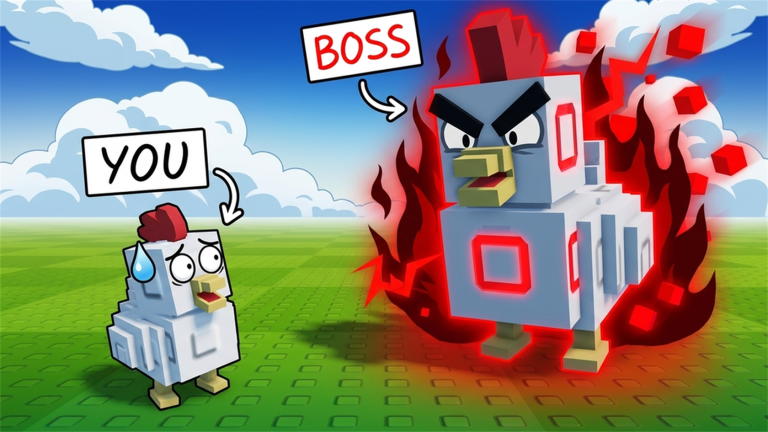
The tower-and-boss promise is the clearest place to look for an ability test with stakes. Before a boss attempt, read the target, note whether the ability is available, and check its activation condition. During the attempt, focus on one visible outcome: a changed phase, a button response, a result message, or a requirement that disappears. Afterward, return to the tower panel and see what changed. This is enough to connect the ability to the climb without inventing floor damage values.
A failed boss attempt can still teach you the correct route. The ability may need a different chicken, a fusion result, or a charge that offline production helps prepare. Follow the visible requirement back to its owning page. The tower supplies the target, while the ability screen supplies the action.
Before a boss attempt, check whether the ability is ready and whether the current chicken is the one the screen expects. After the attempt, record success, failure, or no visible change. A small before-and-after note is enough to tell whether the route needs more PIT money, a new hatch, a fusion read, or a return to the tower.
05 / SYSTEM NOTE
Why this page stops before a roster
The captured research contains the official SPECIAL ABILITIES phrase but not a complete ability roster with stable values. A long roster built from memory would make it harder for players to tell what came from the Roblox product page and what came from a changing community claim. This route stays actionable by giving every future entry the same fields: name, trigger, context, and visible result.
When a new ability is captured, connect it to the chicken or fusion result that owns it and date the observation. That format keeps the page ready for growth while respecting what the current sources actually show. For now, players can use the ability language as a route signal and let the current screen decide the exact activation.
A roster would require stable names, inputs, activation rules, and result evidence for each ability. The captured product language does not provide that complete set. The useful boundary is therefore practical: follow the visible ability prompt, connect it to the chicken or system that enabled it, and record only what the current server confirms. That gives future captures a consistent format and leaves unsupported rankings out of the guide.